
You have a Brick page open in one tab and an Unpluq page in another, and you are trying to work out whether a physical object will finally do the thing that six apps did not.
It might. A physical key is the strongest friction on sale, because it is the only kind that cannot be talked round by the part of you that does the talking. Software negotiates. A tile in a kitchen drawer does not negotiate. It sits there, twelve metres and one flight of stairs away, and twelve metres is a real number in a way that a confirmation dialog never is.
It also has a ceiling, and the ceiling is the strength: the distance is set by you, in advance, and you are the person being bound. Nobody writes that paragraph on a product page. So here is the whole ladder instead, every rung of it, with the price on each one.
Every blocker ever made is a machine for turning one tap into something more expensive
That is the only axis that matters. An app you want to open is one tap away. Each product on this list intercepts that tap and charges you something else instead: a breath, a ten second wait, a count of how many times you already opened it, a plan you made yesterday, a password you handed to a friend, a walk across a room, a subscription, a whole day of waiting.
Rank them by what the currency is, and by whether the part of you that wants the app at 11pm can print more of it. Everything below is filling in the prices.
Ask what it costs to get past. Everything else on the box is decoration.
The cheapest tier charges you a breath, and the breath is free
one sec (around 3,000 US ratings) makes you hold still and breathe before the app opens. ScreenZen (48,000) adds a pause, a reason, and a running count of how many times you have opened the thing today. ClearSpace (9,000) sits in the same place with the same idea.
These work, genuinely, on the openings that were never really decisions: the pocket check, the lift, the queue. Three seconds of stillness dissolves about half of those, and half is a lot.
Where they give way is the openings that were decisions. Friction is a speed bump, and a speed bump does not become a wall no matter how many you install. If you are the person who breathes, nods, and opens the app anyway, you are paying a currency you can print infinitely.
The next tier charges you a plan you made yesterday
Opal (86,000 ratings) is the big one: sessions, schedules, and a strict tier called Deep Focus. Jomo (2,300) and Roots (2,500) sit in the same shape with smaller teams. Brainrot (20,000) does it with jokes, and has never been localised outside the US. Freedom is the desktop-led version, blocking across devices on a subscription.
Foresight is a much better currency than a breath, because yesterday-you is a more reliable person than 11pm-you. The catch in Opal is that the strict mode is the paid mode. Ordinary sessions are dismissible, so the free version teaches you that it can be dismissed, and that lesson sticks.
The third tier charges you nothing, and bills a houseplant instead
Forest (49,000) grows a tree while you stay off your phone. Study Bunny (21,000) runs a timer with a pet and a shop attached. Focus Friend (4,000) has a bean that knits.
These are lovely and they are not blockers. The tree grows whether or not you did any work; it only knows that the screen stayed dark. If your problem is motivation, this tier is the right shop. If your problem is that you cannot stop, a bean is not going to hold the door.
Screen Time is free, and set up properly it beats four of the things above it
Most people who buy a blocker never armed the one that shipped with the phone. Out of the box an App Limit is dismissible in one tap: the limit screen offers One More Minute, Remind Me in 15 Minutes, and Ignore Limit For Today. Block at End of Limit only appears once a Screen Time passcode exists, at Settings > Screen Time > Use Screen Time Passcode. Set that, and the free option climbs several rungs.
Where it gives way is worth knowing before you spend money on anything else. A limit attaches to the app, so deleting the app detaches it and a reinstall gives you a clean one, unless you close that door at Content & Privacy Restrictions > iTunes & App Store Purchases > Deleting Apps > Don't Allow. It does not cover the website version unless you add the domain in the Websites field inside the limit. And a widget, a Spotlight result and a notification preview will each show you content from a limited app without opening it, and none of them trips the limit.
Three seconds of breathing is not a fence. I have watched you breathe.
On a desktop the whole ladder collapses into one command
A browser extension is undone from the extensions page in two clicks by the person who installed it, and neither Chrome nor Firefox asks for a password. Incognito or a second profile walks around most of them anyway. A hosts file entry is better, because it is read by the system resolver and therefore applies to every browser and every app on the machine, but it is nine lines of plain text that one sudo command rewrites. Cold Turkey is the heaviest thing on a desktop and means it, but it is Windows-first and blunt enough to be hard to live with.
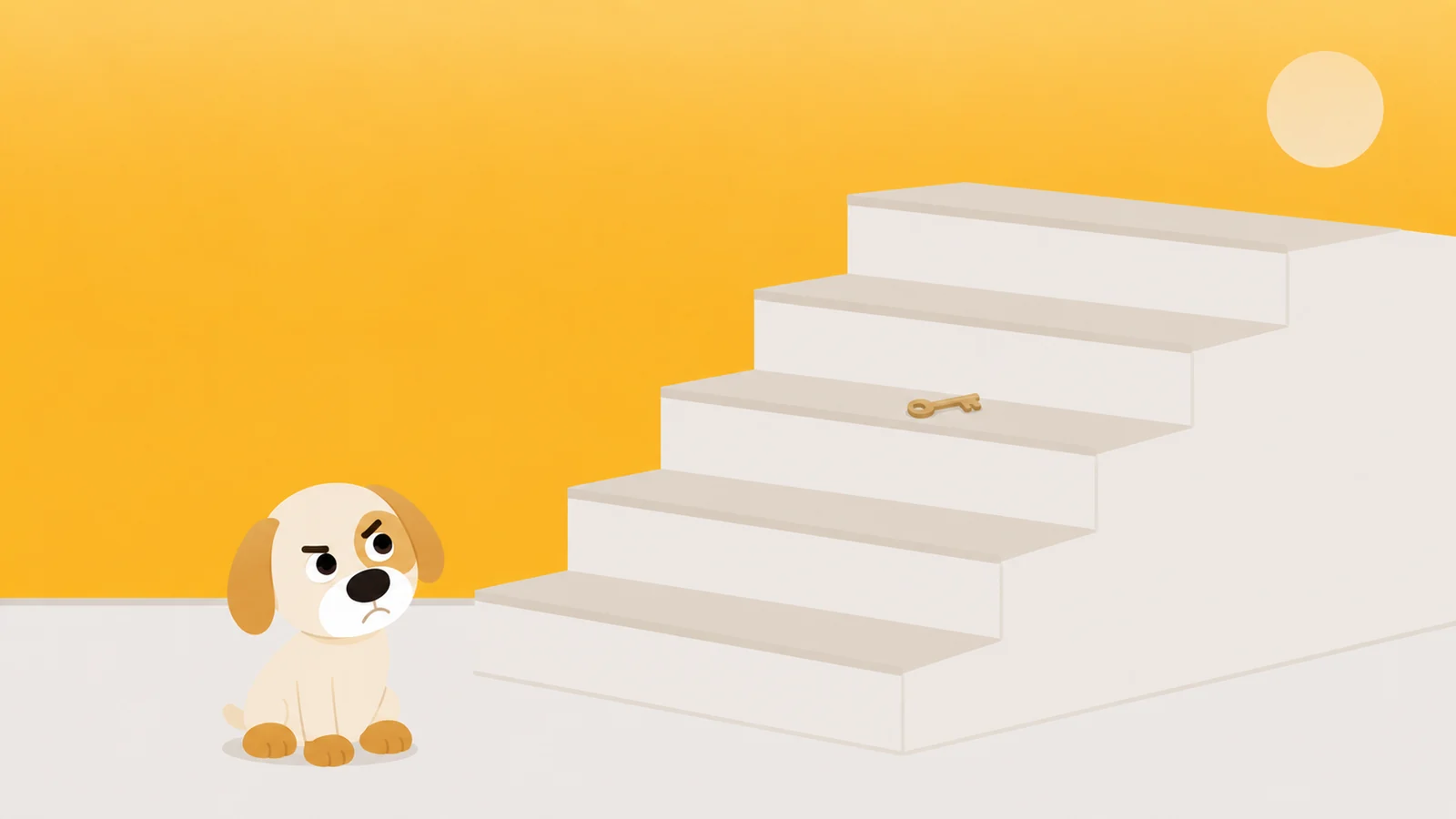
A physical key charges you a walk, and a walk is the best price on this list
Brick is an NFC tile: you tap the phone against it to unlock the apps you locked. Unpluq is a physical key with a subscription attached. Same mechanism, recurring cost.
The reason this tier is genuinely the strongest is that the cost is paid in a currency your brain cannot forge. You cannot argue a staircase into being shorter. You cannot upgrade your way past a drawer. For a certain kind of person, and there are a lot of them, this ends the problem in an afternoon.
The distance is set once, by the person it is meant to bind, and nothing stops that person setting it to zero.
The failure mode is not dramatic and it is not a jailbreak. It is that the tile ends up in your pocket, because that is where things end up, and a tile in your pocket is a one tap unlock with extra steps. Nobody decides to defeat it. It quietly stops being twelve metres away. Then there is the day you leave the house without it and need the map, and, with Unpluq, a bill for a piece of plastic that outlives the enthusiasm that bought it.
What we built instead, and the exact place ours stops
Scrappy is a small dog who guards three rules and nothing else: quiet hours, a daily limit, and a limit on opens. He came out of the same question. If the cost of getting past has to be something you cannot print, and a walk is the best cost there is, can the walk live inside the phone rather than upstairs?
So the currency is a treat, earned by walking, roughly 2,000 steps for one, and it buys five minutes. Treats are never sold and never will be. Resistance is set per app: negotiable takes a treat, firm makes you sit for ten seconds first, absolute means he will not take the treat at all. The shield escalates as you push, from polite to surprised to firm to a flat "No." to something closer to wounded. The removal lock closes the delete-and-reinstall loophole, and switching it off takes a day, deliberately longer than an urge lasts. There is one emergency pass a month, no scolding, because nobody should ever be genuinely stuck. No account and no server of ours; the guarding is drawn by a sandboxed Apple extension that cannot phone home.
Here is the ceiling, and it is a real one. He lives inside the thing he is guarding. A day of waiting is long, but it is a day, and someone determined enough to sit out a day gets there. Steps can be shaken. And there is no Mac app, so if your 11pm problem is a laptop, we are not the answer at all.
I live inside the thing I am guarding. You should know that before you pick me.
Who should buy the tile instead
Buy Brick if you have a fixed place to work and a drawer in another room that you will actually use, or better, a person in the house who can hold the key. Buy Unpluq if you want the same and do not mind the subscription. Buy either if your honest self-assessment is that anything living on the phone will eventually be argued with, because that assessment is usually correct and it deserves respect rather than a counter-offer.
The one thing to remember
The strength of a blocker is not the wall. It is the price of the door, and whether the version of you at 11pm can pay it.
The whole set, priced
| What stands in the way | What it charges to get past | Where it gives way |
|---|---|---|
| one sec | A forced breath | Delays the open, does not prevent it |
| ScreenZen | A pause and an open-count | Friction is a speed bump, never a wall |
| ClearSpace | Intentional-open friction | The same ceiling |
| Opal | A schedule, plus payment for the strict tier | Ordinary mode is dismissible |
| Jomo | A session you set | Small team, thin free tier |
| Roots | A session you set | As above |
| Brainrot | A schedule, delivered as a joke | Never localised outside the US |
| Forest | A tree you would rather not kill | The tree grows whether or not you worked |
| Study Bunny | A timer and a pet | Timer-shaped, not guard-shaped |
| Focus Friend | A knitting bean | Charm over enforcement |
| Screen Time, no passcode | One tap | Ignore Limit For Today |
| Screen Time, passcode set | The passcode, every time | Widgets, Spotlight, notification previews, the website version |
| Browser extension | Two clicks on the extensions page | No password asked; incognito walks around it |
| Hosts file | One sudo command | Undone in seconds by anyone who knows it is there |
| Cold Turkey | Genuinely a lot | Windows-first, blunt, hard to live with |
| Freedom | A subscription and daily setup | The daily friction is real |
| Brick | A walk to wherever the tile is | Only works if the tile is not upstairs, or in your pocket |
| Unpluq | A walk, plus a monthly bill | As above, plus the recurring cost |
| Scrappy | A treat, earned at roughly 2,000 steps, worth five minutes | Lives on the guarded phone; removal lock buys a day, not a wall; no Mac app |
What he'd do
- Name the room before you spend anything. Say out loud where the tile is going to live. If the honest answer is "my pocket", you have your result and it cost nothing.
- Count your pickups first, at
Settings > Screen Time > See All App & Website Activity. Twelve a day and a hardware key is overkill. Ninety and no drawer survives a Tuesday. - Arm the free one tonight, on one app only. Set a Screen Time passcode so Block at End of Limit appears, and give it a week. It will tell you whether one tap or one walk is your real price.
Checked against
- iOS Screen Time paths and behaviours (App Limits, Block at End of Limit, the passcode requirement, the widget and Spotlight leak, the Websites field, macOS browser reporting) taken from this site's verified reference file rather than re-walked for this piece.
- US App Store rating counts from our own keyword research, August 2026. Where no number appears in the text, we did not have one and did not invent one.
- Brick and Unpluq described by mechanism only. No prices are quoted here because we did not have verified figures at time of writing.
- Scrappy's own behaviour (three rules, treats at roughly 2,000 steps for five minutes, per-app resistance, the day-long removal lock, the monthly emergency pass) from the product itself.
Or put a dog on the door.
Free to start, one whole rule, every safety rail. He does not know your passcode and does not want it.
Get Scrappy on the App Store